Bullies are typically popular, and well-liked by their circle of admirers. Take the current POTUS (2026). Definitely a bully; definitely popular with his supporters; he won, not once, but twice. And his people remain steadfast, even though his policies change and contradict themselves seemingly within a single breath.
Growing up with a Bully
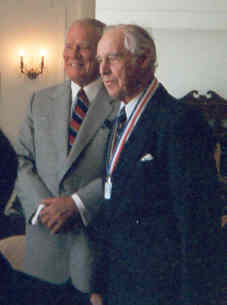
I grew up in a household with a bully at the helm, so as a child, I wasn’t taught how to deal with bullies – I lived with one. A lot of people admired and respected my father; testament to that is the medal he got from the Vancouver Island Human Rights Coalition for his humanitarian activities campaigning for the legalization of cannabis and an end to the war on drugs.
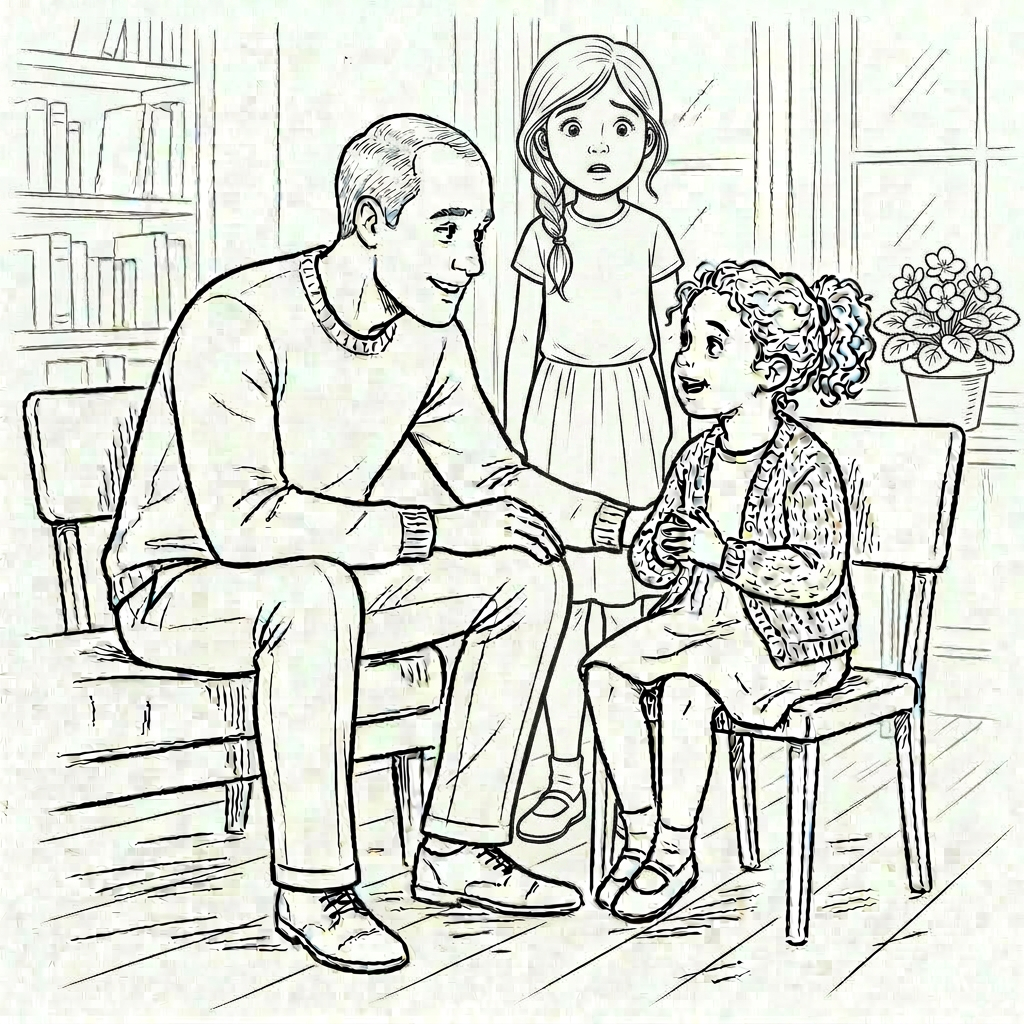
My friends adored my dad. They’d come over to hang out, and he’d sit and talk with them in such a way they’d walk away feeling extra special. I never participated in those charming chats; rather, I’d observe from the sidelines, my brain and tummy swirling with confused emotions, gobsmacked, and totally rattled by this version of a dad I had no personal experience of. Afterwards my friends would swoon: “Oh your father’s so nice, I wish I had a Dad like yours.” I was typically speechless, knowing full well that when no outsiders were around to witness, my father would find some way to utterly diminish and crush me.
I’ve heard it said that every oppressor was once oppressed. My father left England to escape his bullying brothers. His father died when Dad was just five – the youngest of nine. His mother, wanting to live frugally to make the money last, sent him to public school while his older siblings had gone to posh private schools; a humiliation they taunted and bullied him for.
Did they teach my father how to be a bully? If so, did Dad model bullying rather than what I really needed: a role model to show me how to stand up to bullies?
Throughout my life, whenever I mentioned feeling bullied, people would say they couldn’t believe anyone could bully me. But I was bullied. I’ve had $17,000 worth of therapy since 2022 because, after twenty-plus years of being single, I partnered – for a third time – with a bully. But I’m saving that story for C for Colonialism.
Bullies are oppressors. Oppressors seek to squeeze, or perhaps suck the life out of their victims. My dad was like that with me.
There was the time I sat down at my father’s typewriter, without asking if I could use it, taught myself how to use it, then typed a school assignment. I was ten or eleven, eager and impatient, and he wasn’t home to ask permission, or show me how to type. When he got home, I proudly showed him my typewritten page: “Look what I did Daddy, all by myself. Please don’t be mad at me for using your typewriter.”
Dad didn’t scold me for using his typewriter. Instead he scolded me for being proud of what I’d done: “Why can’t you be meek like your brother Thomas?” Then came the Bible verses. Matthew 18:4 — “Whoever humbles himself like this child is the greatest in the kingdom of heaven.” Matthew 5:5 — “Blessed are the meek, for they shall inherit the earth.” And I’m sure I heard a version of Matthew 19:24 that substituted proud for rich, because all my life that verse haunted me and I always thought it was about pride.
Did my dad switch rich to proud because it better suited his purpose? Or did my swirling, confused, chastised child-brain jumble his words? Whatever. I knew I wasn’t getting into heaven because I was proud of having taught myself how to use his typewriter to type my homework, and his scolding made being proud of my achievments a living hell.
For sure, Dad sucked the joy right out of my success. That’s not just bullying. That’s the systematic dismantling of a child’s self-worth. That’s OPPRESSION. That’s the impact of bullying. That’s why we need pink shirt days and anti-bullying messages and campaigns. That’s why kids need role models to show them how to stand-up to bullies. If kids don’t learn how to artfully dodge bully bullets, they’ll be a bully target their whole lives. Bullies can smell their targets. Watch for wiggling noses.
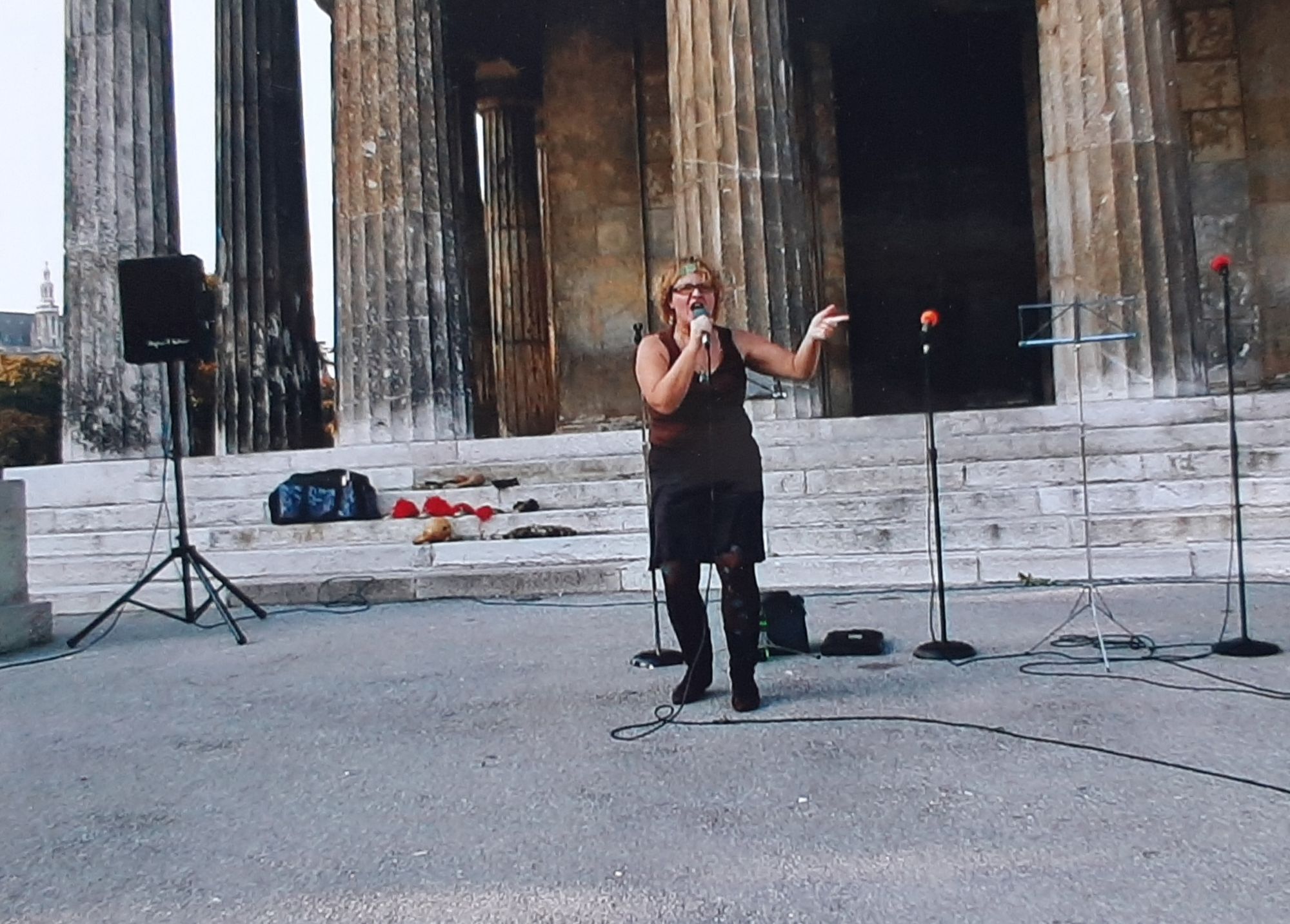
I stood up to a guy who once unplugged my microphone, and accused him of being a bully. In return he removed me from the email list he’d built for what was a public, community jam, then changed the day of the jam, and told everyone it was now private and not to invite anyone without first clearing it with him. That’s bullying by exclusion. He’s a bully, and everybody thinks he’s such a nice guy – he made himself their leader by building the email list; he made himself liked by handing out free cans of fizzy flavoured water. Sound like a leader you’ve heard of? Well, that’s how bullies win. Just like my father, beloved by all the little girls who wished they had a dad like him; not because he gave them fizzy water, but because he made them feel special.
ADHD Brain a Bully Target
There’s something I’ve only recently come to understand about why I spent my life feeling like I was walking around with a bully target on my forehead. My ADHD brain is fast at pattern recognition, creative leaps, seeing connections others miss. But reading social threats requires a different brain – one that prioritizes tracking micro-expressions, tone shifts, group dynamics, and unspoken rules – all in real time. An ADHD brain makes reading group dynamics harder.
A teacher at a continuing education class once looked directly at me on the first day – after I’d aced his entry exam – and announced to the room: “I really hate artists.” I was crushed and confused by his comment, yet didn’t register it as a group-dynamic threat, so didn’t feel a need to protect myself. Yet he’d set the tone for the group to follow. And hate me they did! I failed to protect myself, not because I was less capable, but because my brain was busy doing something else – mostly being excited to be there to formally learn something I’d taught myself, and knew I was good at. I knew nothing about the group dynamic social threat detection system most people run automatically.
Bullies are often very good at finding that gap. They scan for people who aren’t running the defensive perimeter. And there I was – more enthusiastic than guarded!
Inspirational Leaders Rise Above Bullies
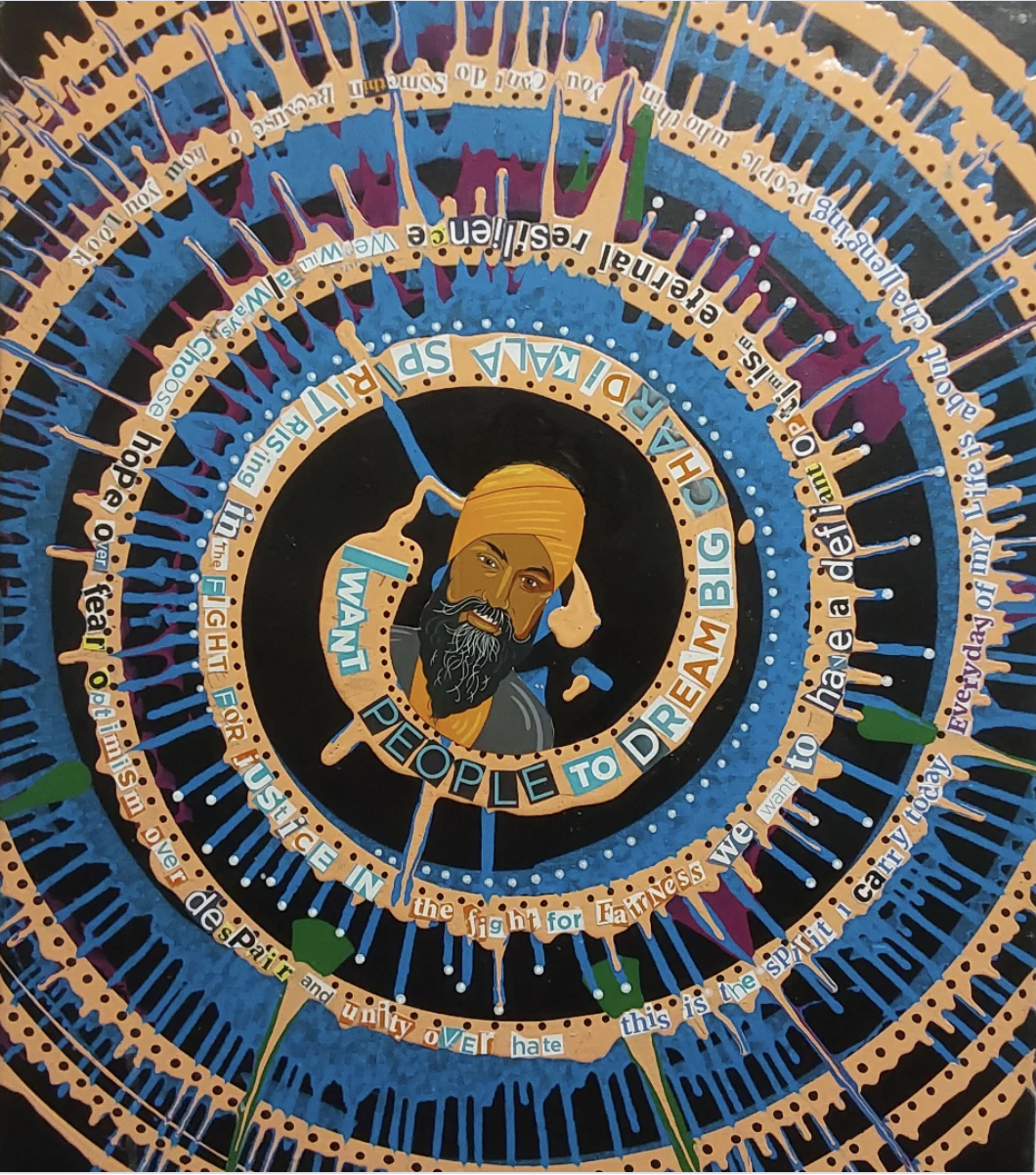
Artwork by TRAV the Transformer (2017-18) and collaged quotes by DRAA (2025)
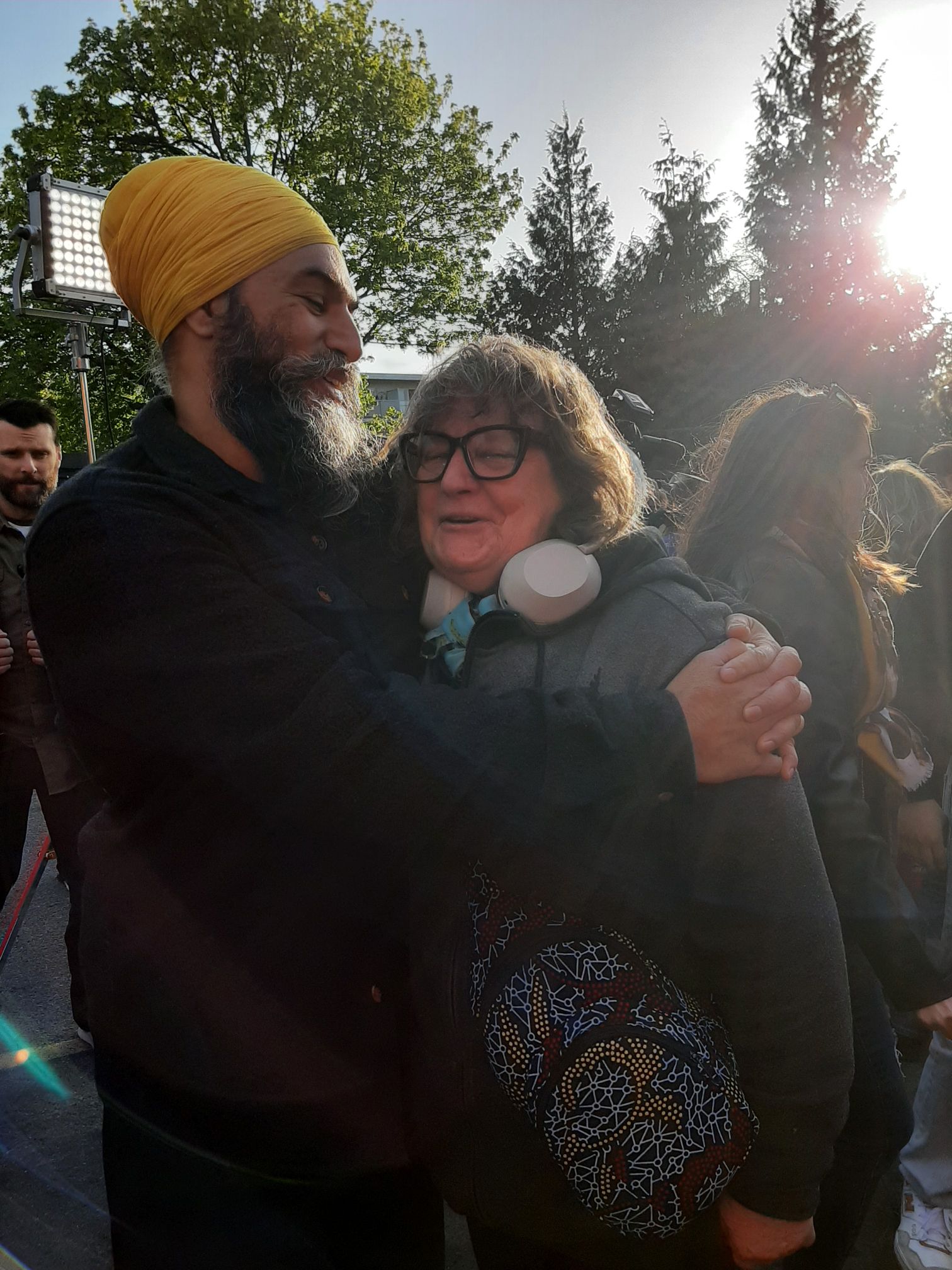
I’m inspired by Jagmeet Singh – bullied as a child and who credits his mother for teaching him that “we are all one, and if one person is suffering, we are all suffering” — and Wab Kinew, Ojibway Premier of Manitoba, who experienced racially motivated assaults, and overcame an early life of alcohol-fueled problems, to go on to stand up to bullies with dignity. These men are real leaders.
But where are the inspiring women? Elizabeth May and Greta Thunberg come to mind immediately. For sure they’ve been bullied: called difficult, angry, unstable, and accused of shouting when they’re merely speaking passionately and trying to be heard over the shushes and naysayers. Elizabeth is a veritable, non-stop tour de force; and Greta, who has Asperger’s, says plainly: “being different is a superpower.”
Clearly not every oppressed person becomes an oppressor and not every bullied person becomes a bully. So my question – “does an oppressive bully create bullies” – changes and becomes – “what determines how a person turns out?” Exceptional Individuals says: “With the right support and adaptations, people with autism can draw upon their unique strengths, and maybe even change the world.”
Jagmeet Singh credits his Mom, and I have to say, Mom always stood up for me when Dad would go on a tirade. She saw in me, and sought to protect the very qualities that have made me a bully target, and that have made me a unique artist and a vital human being – my openness, full presence, genuine engagement and energetic enthusiasm. She also experienced the ADHD, even without a childhood diagnosis. In her words: “Oh how you wore me out, you were always wanting to learn and be doing something. You were non-stop!”


Leave a Reply