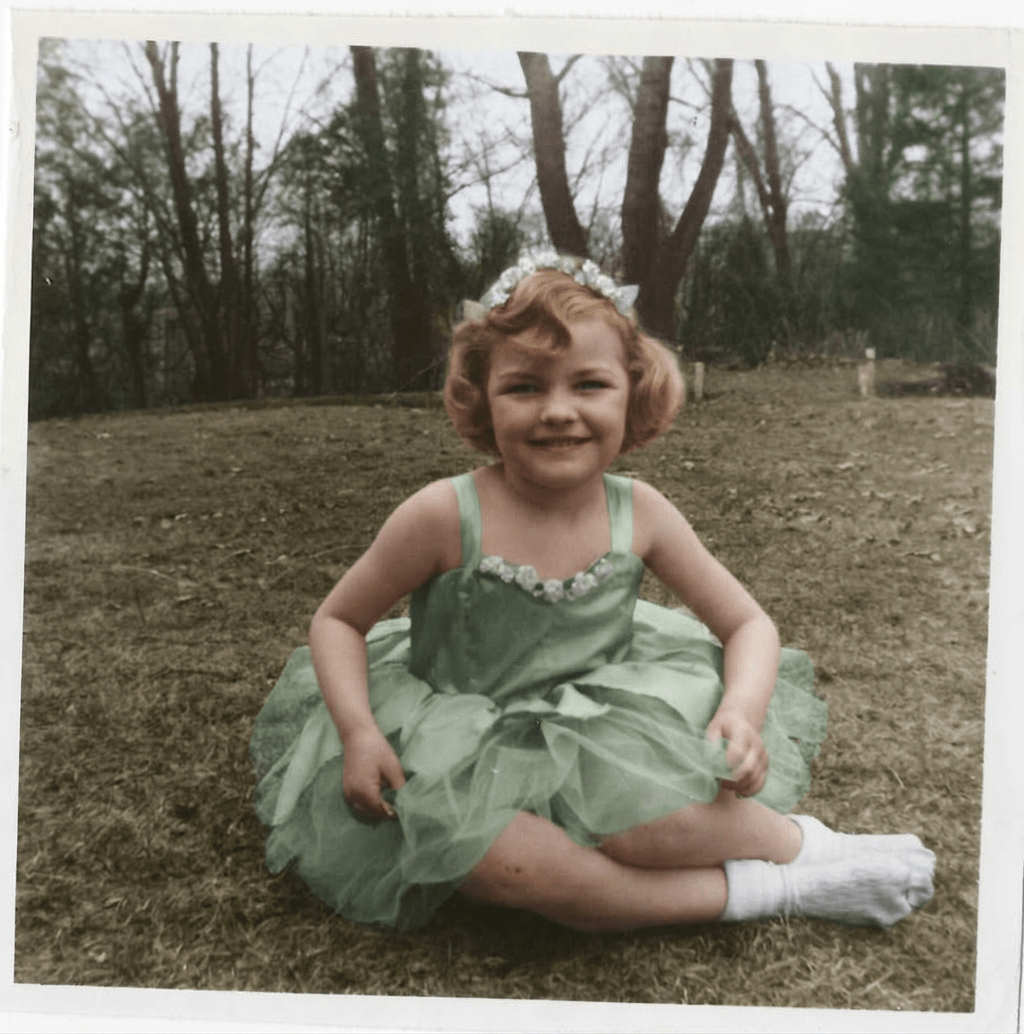
I can’t remember the first time I heard the word. But once I’d heard it, I couldn’t unhear it. It’s an odd word – a neologism that turned up in the 1980’s – used to describe the thinking that there’s a typical ability that we must all achieve in order to be considered normal.
Ya Gotta Toughen Up for the World
In the late 1990’s, I did a short stint working part-time as a lifeguard/swimming instructor in a high-end fitness centre in Montreal – qualified with a National LifeGuard Certification and a B.A. Theatre cum laude, from the University of Ottawa, fully bilingual English-French…and…and…and. I won’t write the long list of qualifications or much better jobs I’d done. Suffice to say, I was definitely over-qualified for the job, and of course, got fired!
I’d reported a colleague who consistently broke the rules by arriving late, and running across the swimming pool deck to the change room with her outdoor shoes on. It infuriated me. I was let-go for reporting her, and when he dismissed me, the boss said: “You gotta toughen up for the world.” I had no idea what he was talking about. Now that I have an inkling of an understanding of the word ableist, I think I can safely say he was being ableist when he made that remark.

Bullying the Different One
They pulled my hair on the school bus (age 16) and when I wore it in braids, one of them took out a pair of scissors to cut off one. Some sweet soul stopped them before the scissors sawed it off. I didn’t realize how different I was. I just felt picked on, and had no idea why. The school bus kids were being ableist, and probably hadn’t a clue; it was 1971, the word hadn’t even been created then!
Excluded, excluded, excluded…
As I got older, I came to fully understand how different I am, and my difference was reason enough for the ableists to exclude me. I think one of the toughest exclusionary stings was when the women in the Web Foundations class I’d enrolled in at Camosun College ganged up on me and got me thrown out of the class. I’d gotten into the class at the last minute. I’d applied for the next term, and received a phone call from the administrator, inviting me to get in immediately. She said something like this: “We’ve got your application here, and we have an exceptional situation. We’ve just run the two-week pre-requisite course and we had an unusual number of students fail the exam, so we are offering a two-day second-chance course which will be followed by an exam. If you come and do the two-day course and pass the exam, you can take the course this term.” So I took the two-day second-chance course and aced the exam. I actually got 100%. God the women in that class hated me. One in particular. She was the ableist ring-leader. I did get the certificate for my course, which I completed at home, alone.
“It’s Ableist to be expected to do everything”
That’s what a friend said to me after reading an early draft of my – as yet to be published – novel. I so needed someone to do the next bit: submitting to agents, editors, publishers. I was confused by her statement, not only because – now that I’m sat here writing this, I think that was the first time I’d heard the word ‘ableist’, and really didn’t understand the word – but because I’d always done everything myself, producing and starring in plays; creating, writing, producing and starring in my performance projects. Writing the poetry, and making the books. I’d always done it all myself because the groups always excluded me, so I had to realize my visions alone. When I was younger, it was easier somehow to compartmentalize my brain into creative and administrative. But then peri-menopause, and menopause hit, and suddenly there was the creative brain and the administrative brain, and ne’er shall the twain meet! I churned out huge amounts of creative work, and wished I had the wife I saw admin-ing the work of so many successful male artists.*
ADHD Diagnosis Post-Menopause
I got the diagnosis during the COVID pandemic. My union – UBCP/ACTRA – was paying for members to get some counselling to help us through the pandemic. The counsellor I saw via Zoom (or whatever platform it was we used) asked me to take a test. The results came back “very likely to have ADHD” . I took more tests. Had virtual visits with a specialist who said: “You very likely have ADHD.” I started to research it, and thought: “Oh, I get it now.” The ‘it’ being my life and why everything had been the way it had been.
I recently met a young woman, a lawyer; she has ADHD and she was telling me why it’s so hard for her to work full time and have a life, and how she wishes the firm she works for would let her work part-time. Oh I so relate! That’s why, I, fluently bi-lingual, with a BA Cum Laude in Theatre had worked as a lifeguard/swimming instructor – re-certifying at age 40 something.
When I first got the diagnosis, I did a lot of research and one day was listening to a podcast about ADHD, and was stunned to hear the medical doctor state emphatically that the reason girls are less frequently diagnosed with ADHD than boys, isn’t because fewer girls have it, but because estrogen does a better job of managing ADHD than does testosterone. Hence we get ‘batty old ladies’.
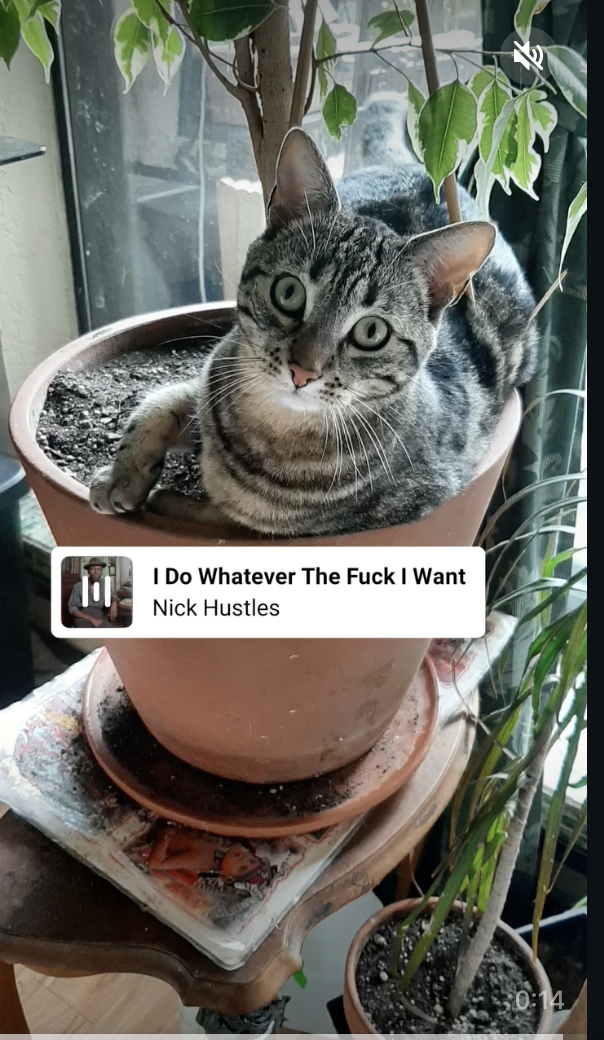
ADHD’ers also do better with a body-double: someone, or something present in the room with us, to ground us and help us stay focused. Hence we get ‘batty old CAT ladies!‘
Then there’s the RSD: Rejection Sensitive Dyspohoria – and “You gotta toughen up for the world.” I probably cried when that swimming pool boss fired me.
Dropped on Head at Four Months of Age

…so that’s what did it! Apparently we were on board the Saxonia, leaving for Canada. I was a wee babe, just four months old; Dad was holding me – in a basinette? I don’t know, I just know years later Mom told me he dropped me and I landed on my head. When I was ten or eleven they gave me a booklet called: “Why Am I afraid to Tell you Who I Am?” I had no idea why my parents had given me this booklet. I was a little kid, just being me. I figured other kids treated me differently because Dad was the church minister, and didn’t for one minute think I wasn’t normal. My parents were ableist when they gave me that booklet (NOT the book by John Powell, published in 1969 – but perhaps a booklet he wrote before the longer version?) They didn’t give it to my brothers.
Not a Realistic Drawing of a Tree
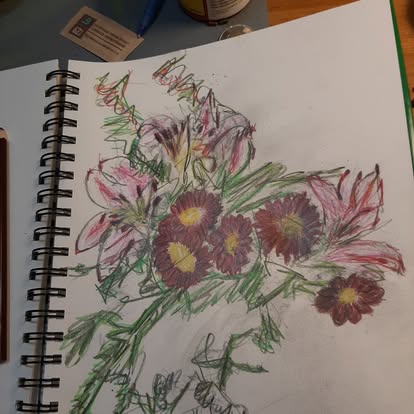
I remember the teacher holding up a drawing I’d done of a tree – age 11 or 12 – and telling the class it wasn’t realistic, it was…(she probably said surrealist, but all I heard was “not realistic” .) I’d spent ages painstakingly drawing every leaf in intricate detail. Her remark convinced me I could not draw, and it was years – like fifty? – before I ever again attempted anything to do with drawing. That teacher was being ableist when she did that.
“You Have a Very Low Voice for a Girl”
I sang all the time as a little kid. Lying on my belly, watching Broadway musicals on telly, dreaming of doing that: singing and dancing on stage. I manifest my dreams age 7-8, putting on cabarets in the boat houses along the tidal river we lived on. Oh I loved to sing. I did a try-out for the church choir. Afterwards the choir master sat me down and said: “Girl’s usually have high voices, but you – you have a very low voice for a girl, so you can’t sing with the girls in the choir, and you’re not a boy, so you can’t sing with the boys.” He wasn’t only being ableist with that remark, but was also gendering. I’ll write more about that topic under G.


I recently met a successful female author, self-published, an Amazon top-fifty romance writer. Her husband manages her marketing. She says no one but her reads her books before she publishes! We’ve come a long way, women!
After publishing this, I had a private chat exchange with a woman who asked if she was ableizing her ex – keeping and looking after his stuff, or was he the ableist? Using her for her lack of guts? I responded that perhaps she was thinking enablingrather than ableizing – unless she applies the concept of cultural ableism in a broad sense of the term – as I do with the ballet vs tap – because he had a radically different cultural upbringing than she did, and therefore has a totally different internal messaging about objects and leaving things behind.